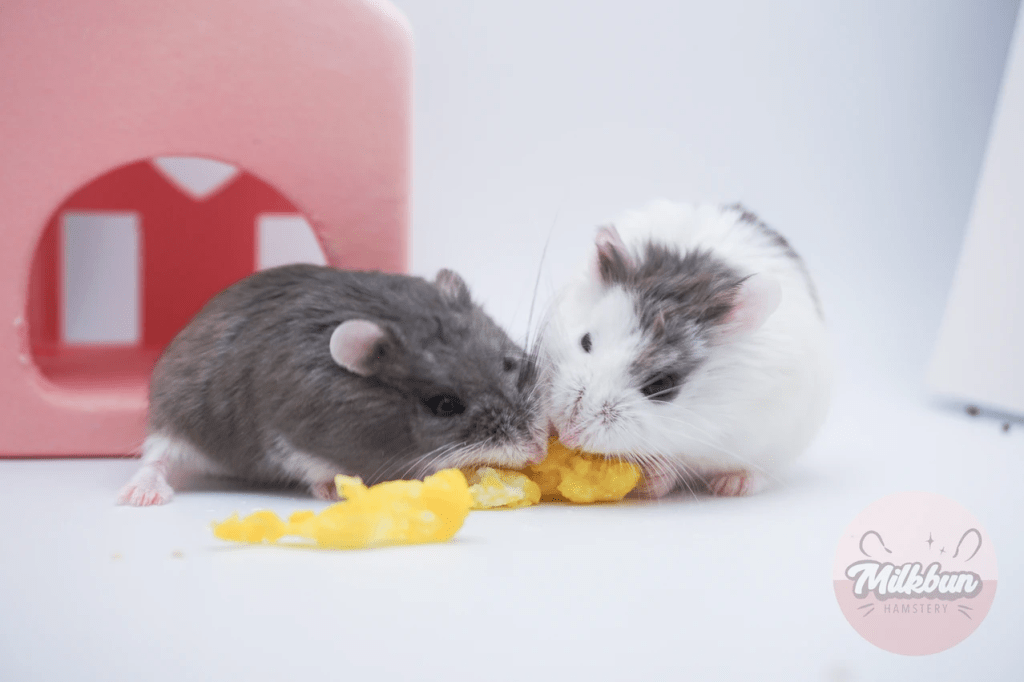
For the very short amount of time that the Phodopus roborovskii has been bred in captivity, they current display a variety of colors.
Firstly, there are four base coat colors of the Roborovski – Agouti, Blue, Recessive Husky, and Dominant Husky.


Agouti (Wild Type):
The wild type of the Roborovski. The root of each hair is nearly black, while the tips are a pigmented reddish brown, creating the appearance of a light brown hamster with a visible dark undercoat. The white underside of the coat begins at the tip of the nose, goes over the whiskers, cheeks, and descends into three arcs on
the side of the body. The separation from brown to white should be as clean as possible. Above each eye is a white spot, which should be slightly larger than the eye.
Faults – Grey-ish brown pigment. Eye spots that are too small, big, irregular. White markings other than the underside or pair of eye spots. Colored hairs on the belly.


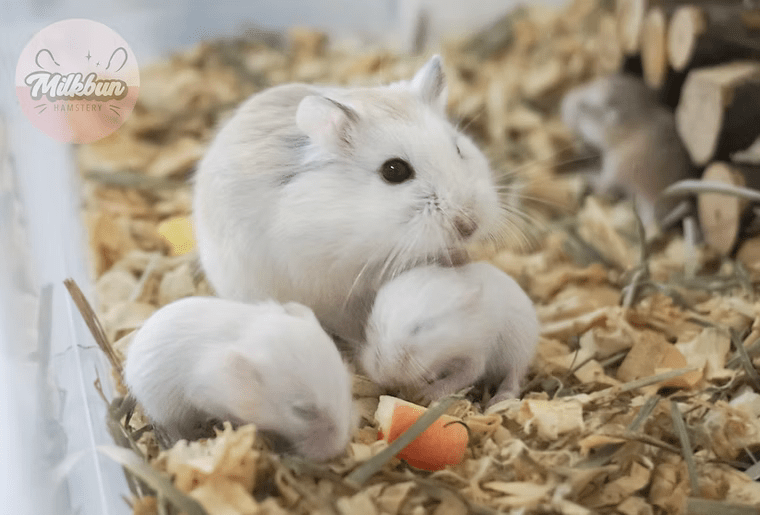
Recessive Husky:
A pale, sandy color, but retains the same dark roots as the agouti. The white underside extends over the eyes, forming a “v” shape between the ears. On the cheeks, the white reaches the ears.
Faults – Grey-ish pigment. Too much white. Too little white. Colored hairs on the belly.
As the name implies, this base color is a simple recessive gene. This base can be combined with both forms of piebald, as well as the modifying gene Cinnamon.
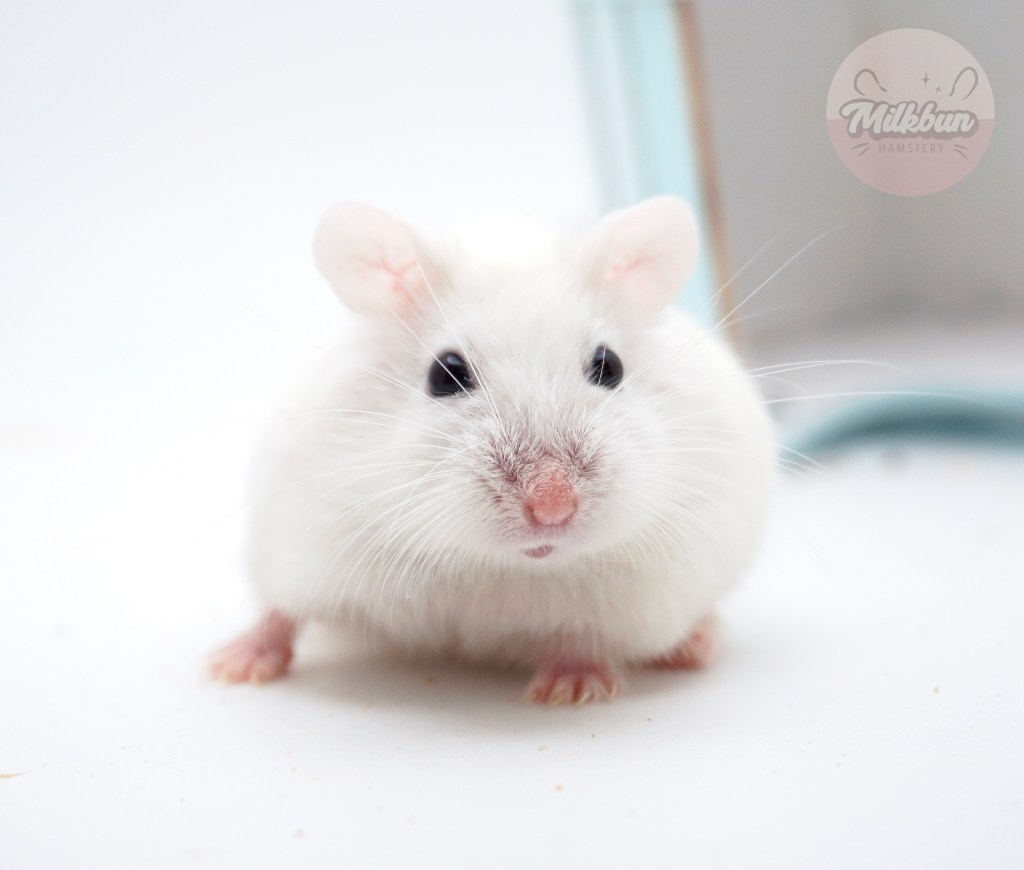
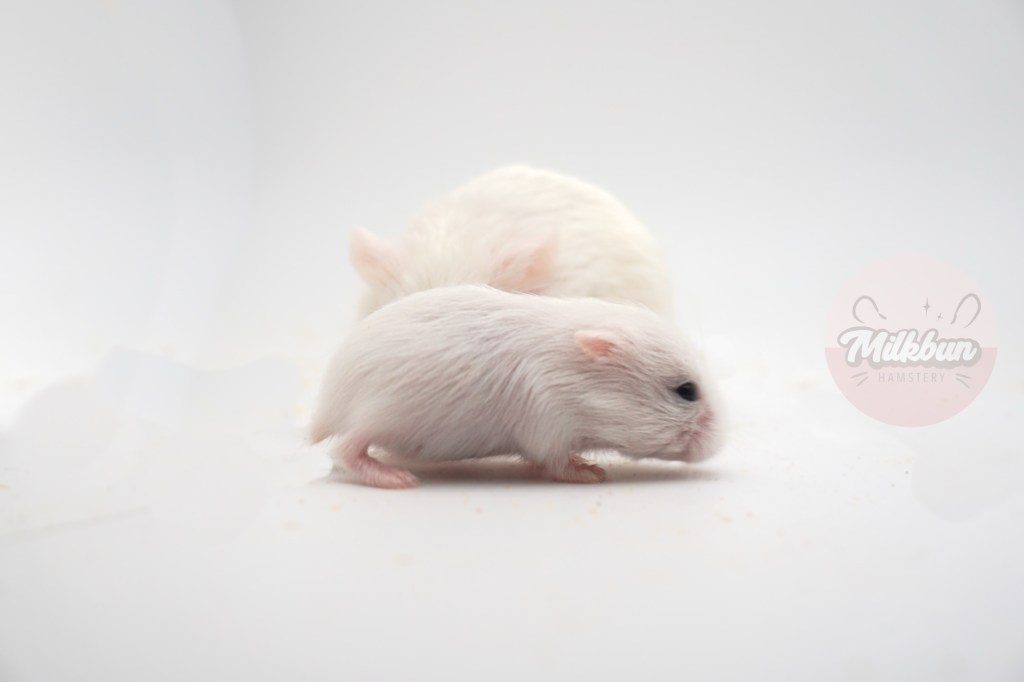

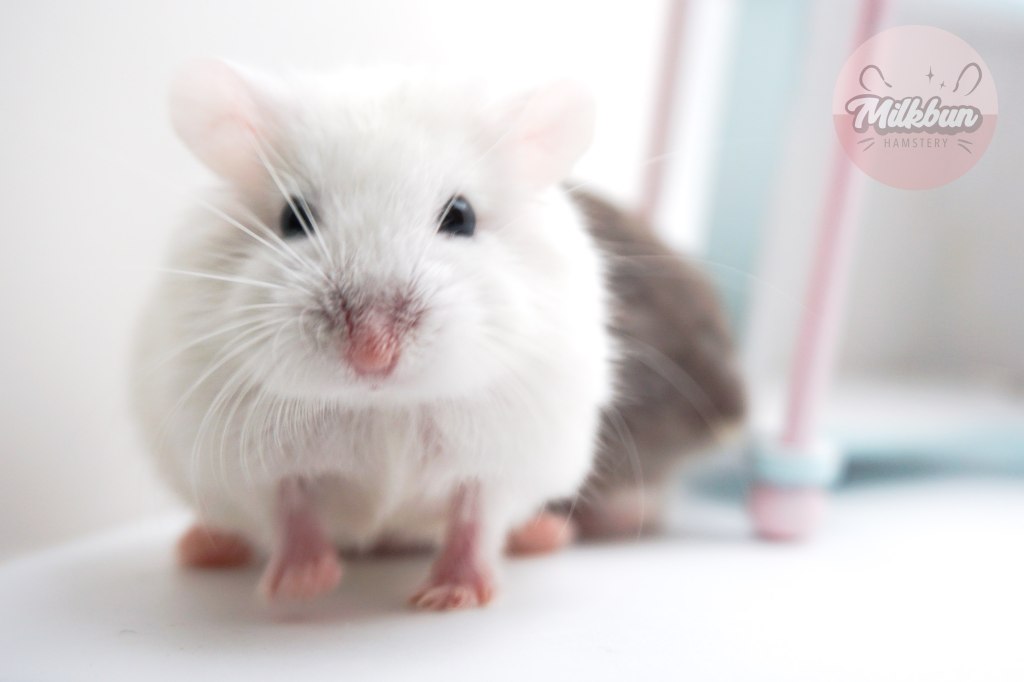
White: Pure white.
Faults – Colored hairs or yellowish pigment.
Self white hamsters easily produce self white offspring. White has black eyes, but can be combined with the Cinnamon gene to exhibit red eyed white Roborovski.
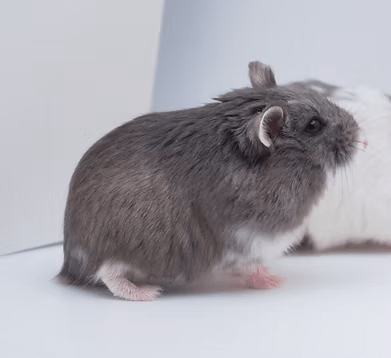


Blue:
Dark grey-blue, but can appear slightly brown in different lighting. The deeper the color is, the better. The minimal white underside is unique to the blue. The white starts at the tip of the nose, but goes under the chin, rather than over the whiskers. On the body, the white extends very slightly above the legs, and the belly is completely white. There are no eyebrows or white markings other than described.
Faults: Too light of pigment, too dark of pigment. Eyebrows or white hairs that are not the underside. Colored hairs on the belly.

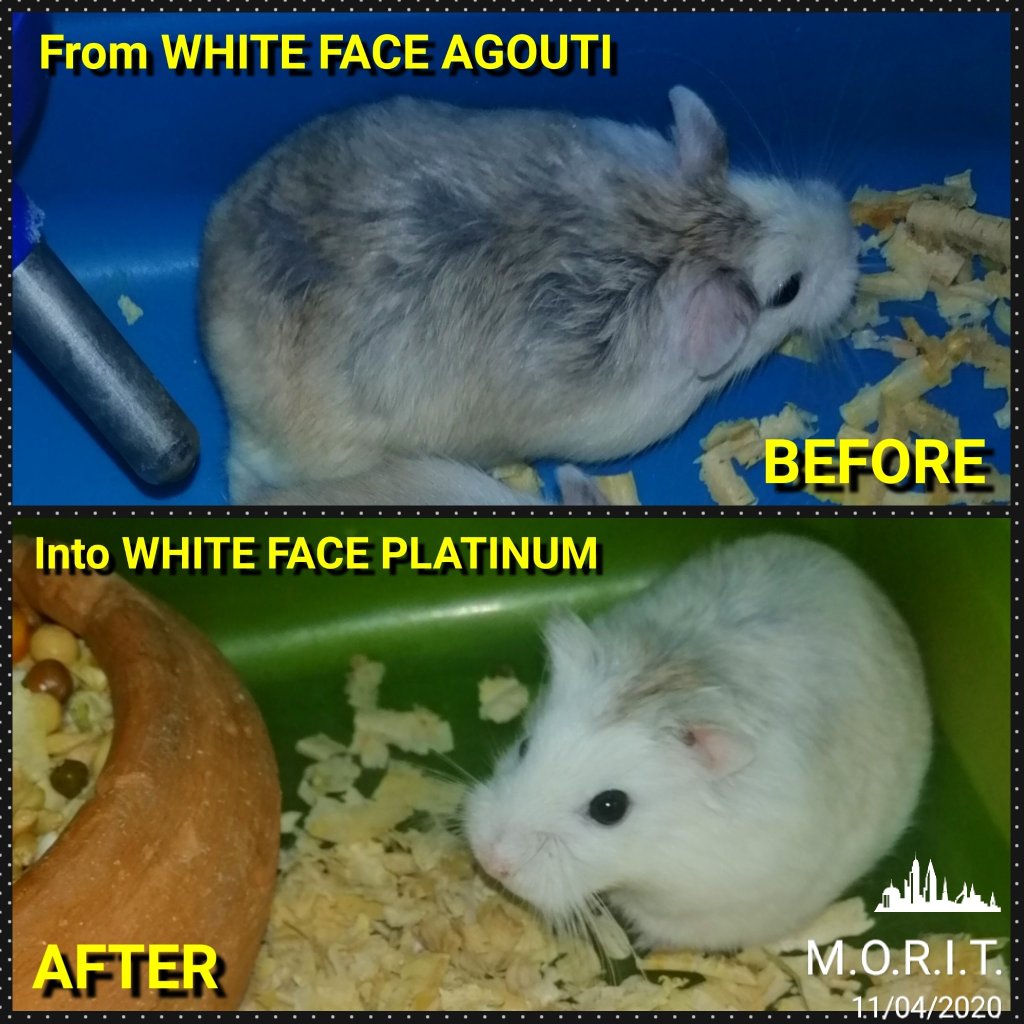
Dominant Husky (White Face Agouti):
Pigment is very similar to the agouti, with slightly paler and greyer coloration. The markings are the same as the husky; white underside extends over the eyes, forming a “v” shape between the ears. On the cheeks, the white reaches the ears. Whiteface can silver with age.
Faults – Too much white. Too little white. Colored hairs on the belly.
(Photos courtesy of Oak Farm Hamstery and MORIT Hamstery)


Platinum Husky:
Platinum resembles Whiteface, in color and markings, but they are a bit paler. Silvering significantly with age, adults typically become light grey, and become completely white by the end of their lives.
Faults – Too much white. Too little white. Colored hairs on the belly.
(Photos courtesy of Bong Panlaque)
Next, there is the ‘Cinnamon’ gene.
The Cinnamon gene lightens the base coat and gives the hamster red eyes. In the case of self animals (meaning the absence of piebald), the red eyes often darken to a nearly black, dark ruby color. In the pied Cinnamon animals however, the eyes will typically remain very bright red.
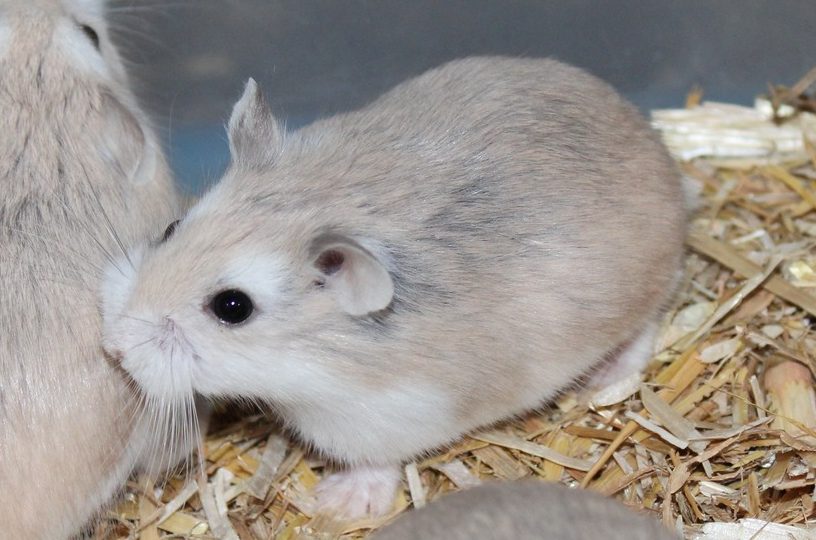


Cinnamon:
Slightly paler than the agouti, the fur is a cream-beige. Eyes are red at birth, but darken to black with age.
Faults – Too light of pigment, too dark of pigment. Eye spots that are too small, big, irregular. White markings other than the underside or pair of eye spots. Colored hairs on the belly.
(Photos courtesy of Saskia Hamstery)
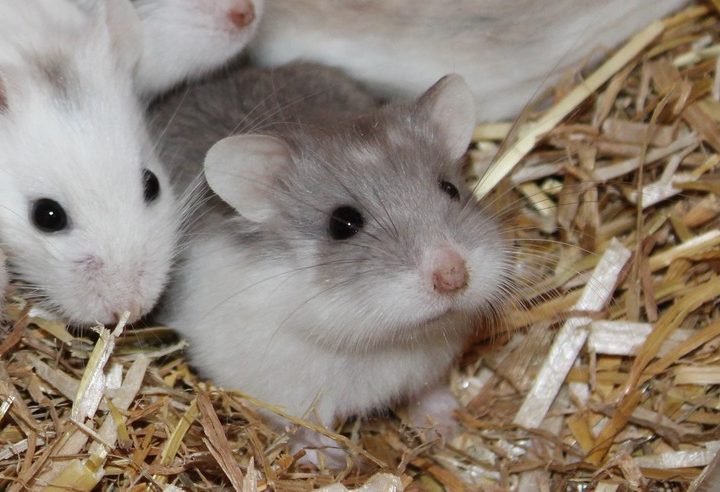
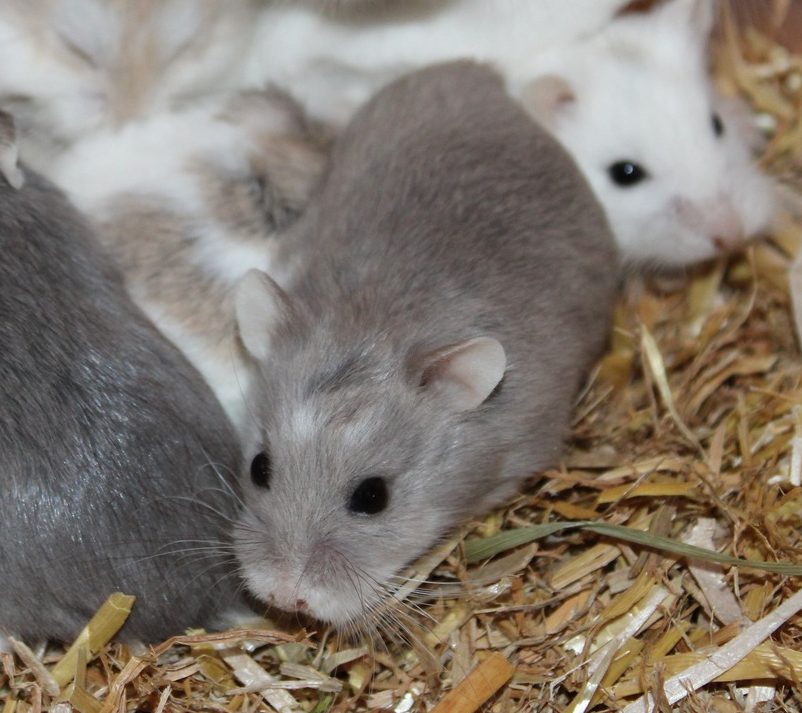

Cinnamon Blue:
It is the same as the blue in markings, but noticeably paler gray coloration. Slight brown tint is more prominent in this variety, compared to the non-Cinnamon blue. Eyes are red at birth, but darken to black with age.
Faults: Too light of pigment, too dark of pigment. Eyebrows or white hairs that are not the underside. Colored hairs on the belly.
(Photos courtesy of Saskia Hamstery)
Patterns –
Patterns of the Roborovski are added white markings on the existing bases.
Piebald varieties are comprised of Agouti Piebald, Husky Piebald, Blue Piebald, Cinnamon Piebald, Cinnamon Husky Piebald, Cinnamon Blue Piebald, Whiteface Piebald, and Platinum Piebald. Piebald hamsters that express the Cinnamon gene of any form typically have red eyes.
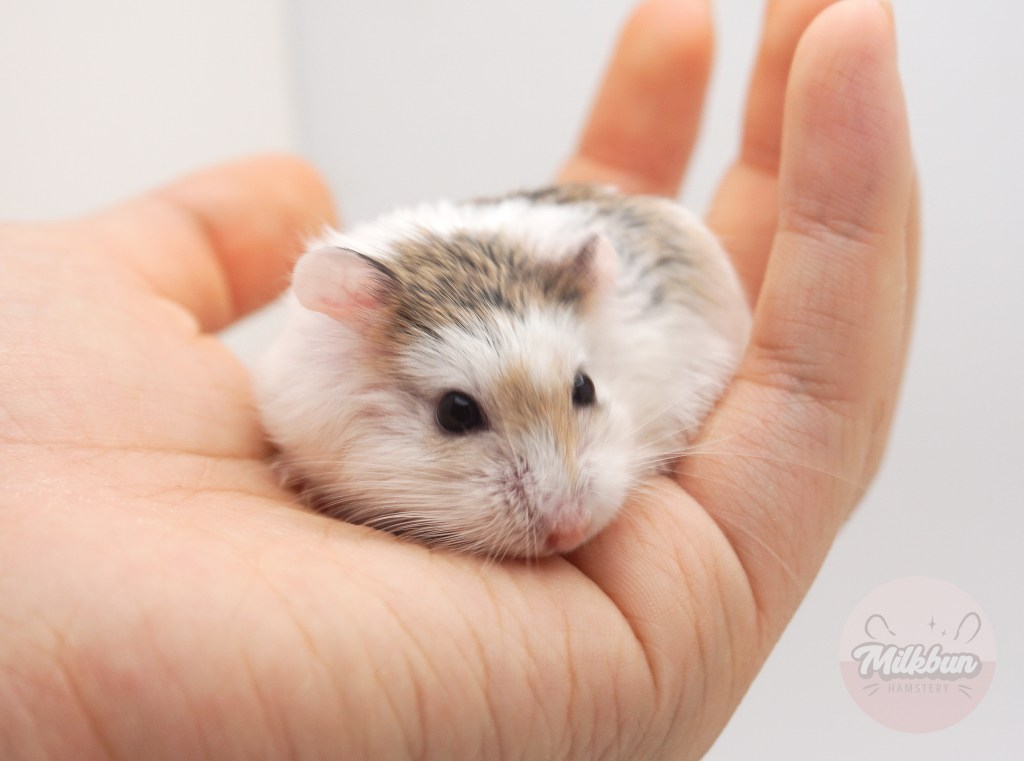
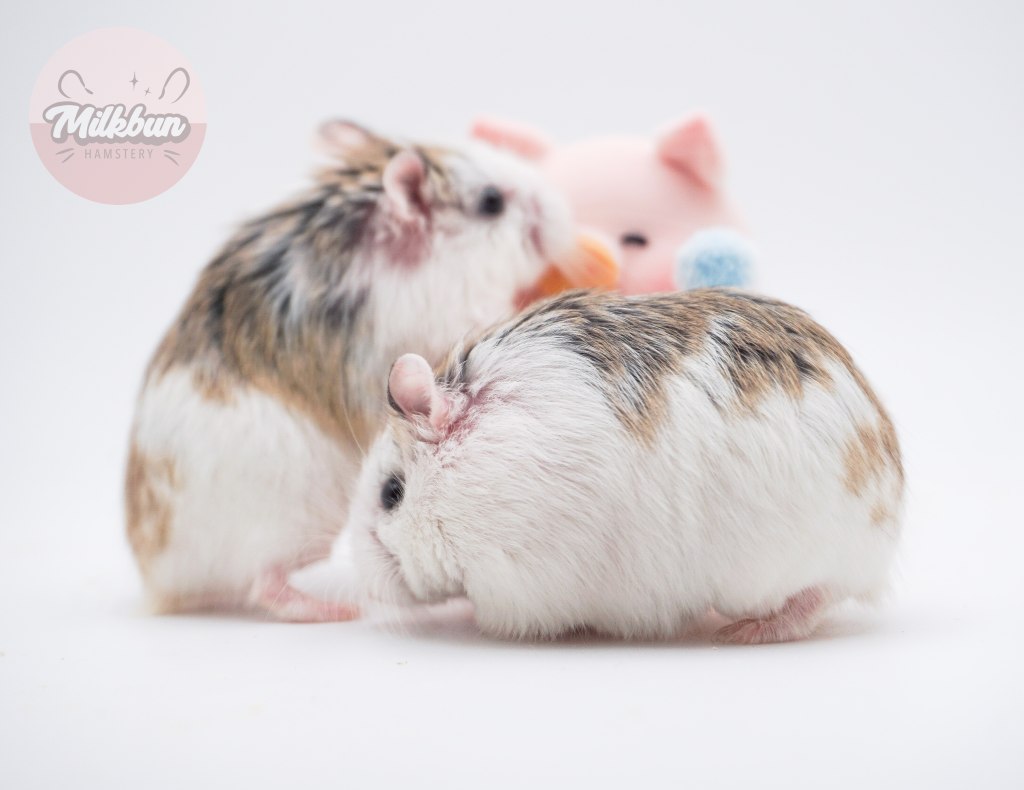
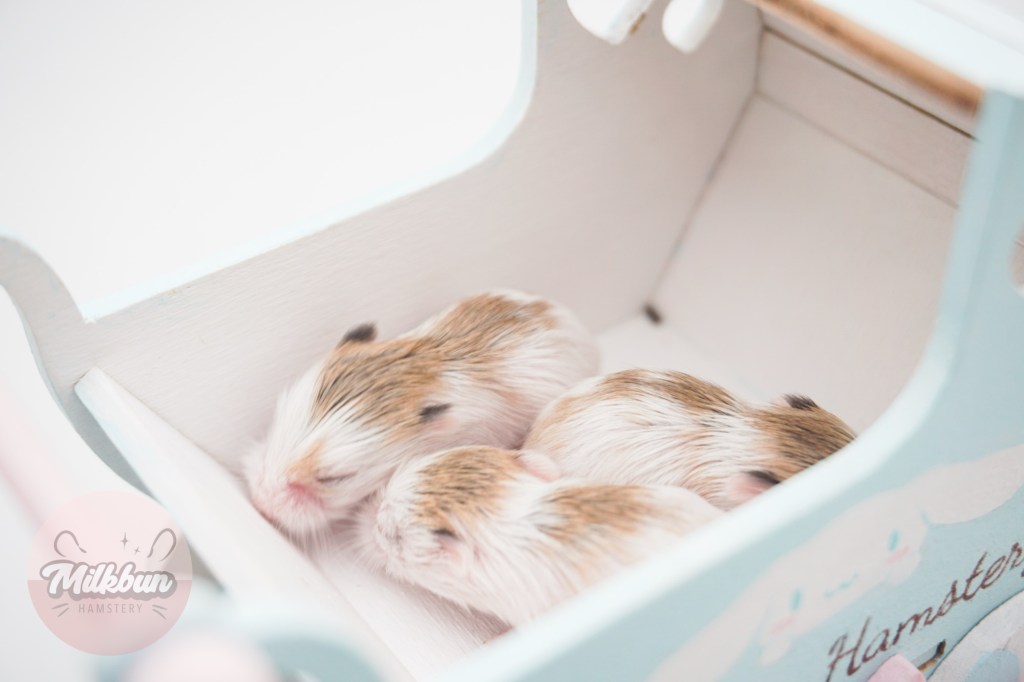
Agouti Piebald:
The root of each hair is nearly black, while the tips are a pigmented reddish brown, creating the appearance of a light brown hamster with a visible dark undercoat. The hamster is white with significant patches of agouti, typically beginning from between the ears and trailing down the spine and over the sides.
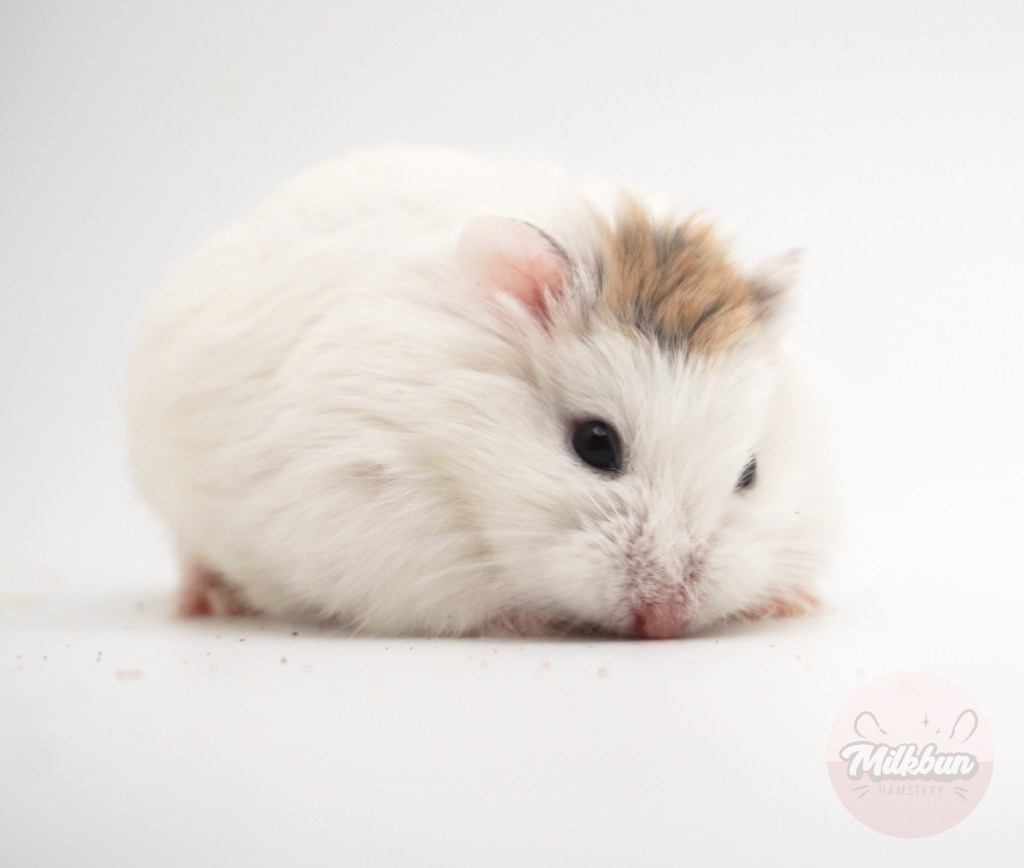
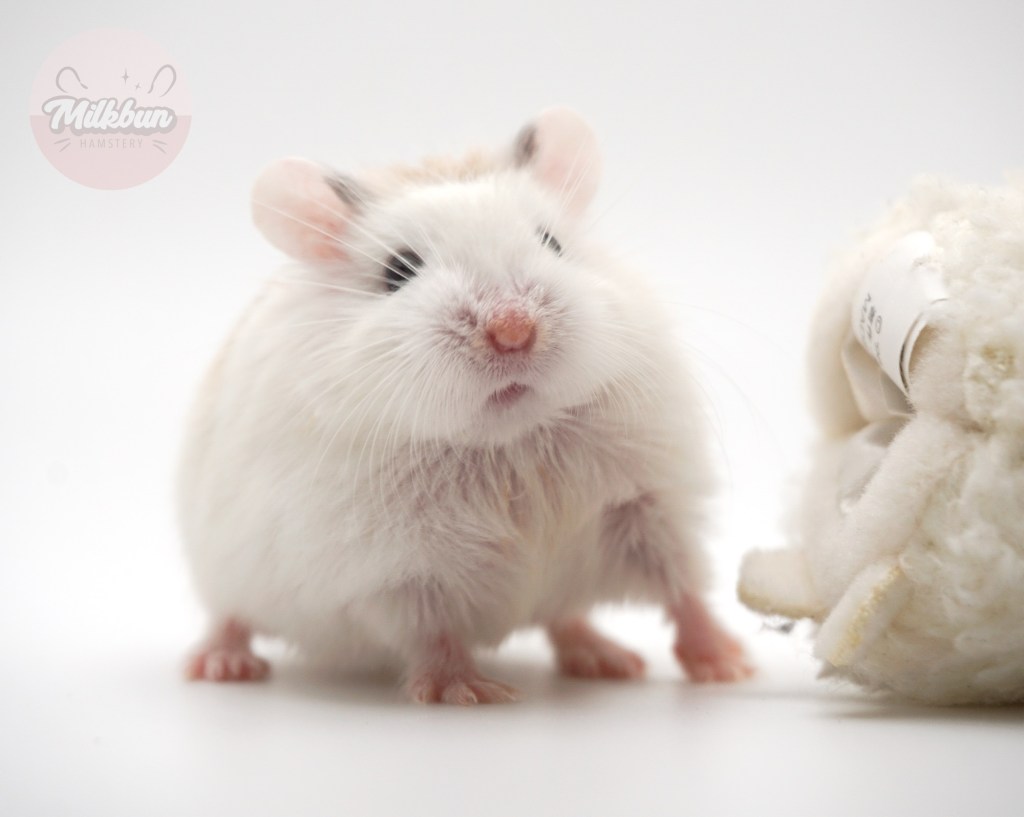
Recessive Husky Piebald:
A pale, sandy color, but retains the same dark roots as the agouti. The white underside extends over the eyes, forming a “v” shape between the ears. On the cheeks, the white reaches the ears. The hamster is white with significant patches of agouti, typically beginning from between the ears and trailing down the spine and over the sides.
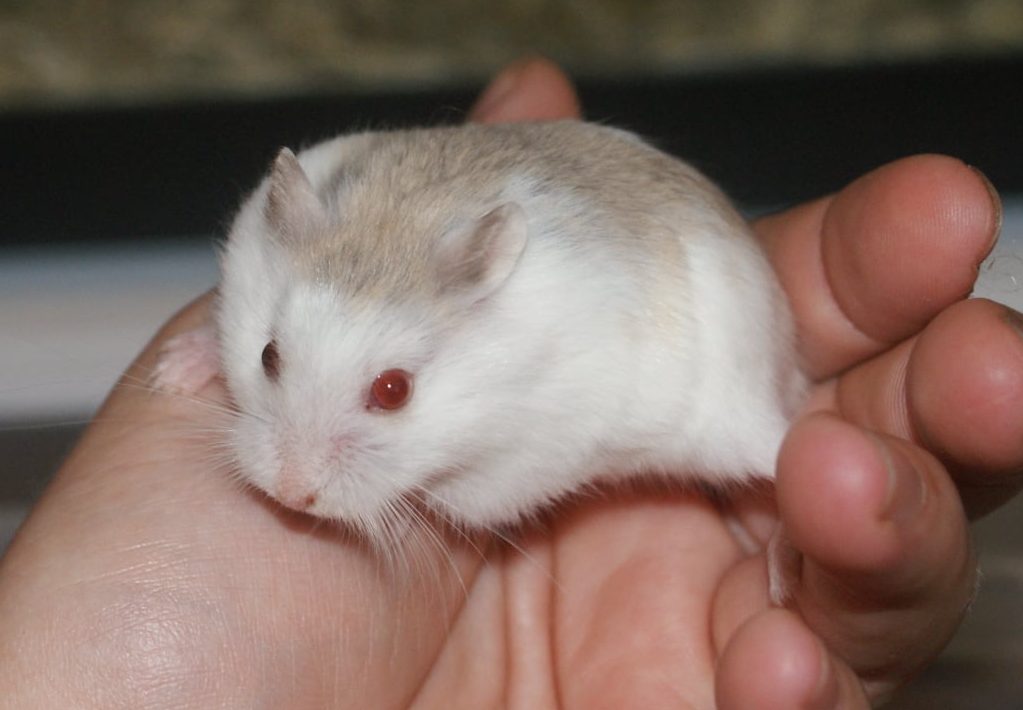
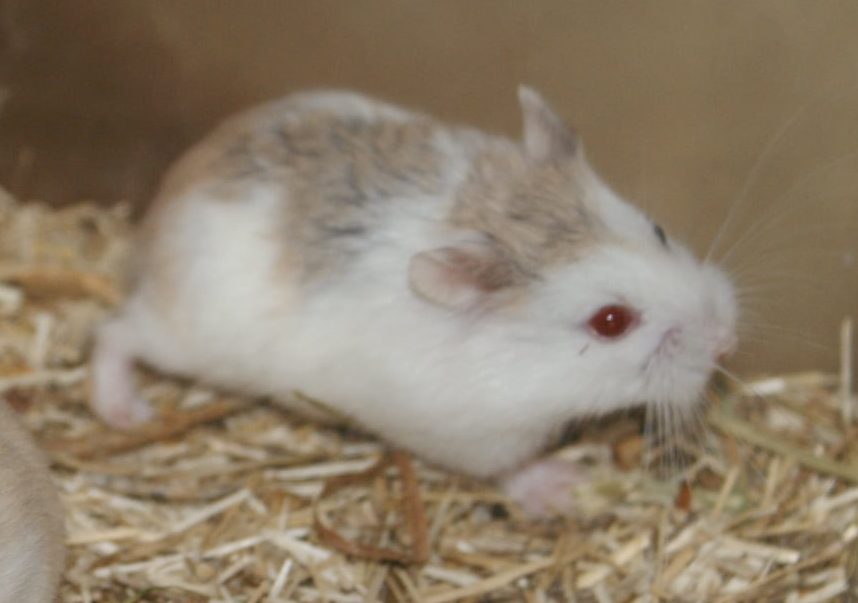

Cinnamon Agouti Piebald:
Slightly paler than the agouti, the fur is a cream-beige. Eyes are red. The hamster is white with significant patches of agouti, typically beginning from between the ears and trailing down the spine and over the sides.
(Photos courtesy of Saskia Hamstery)
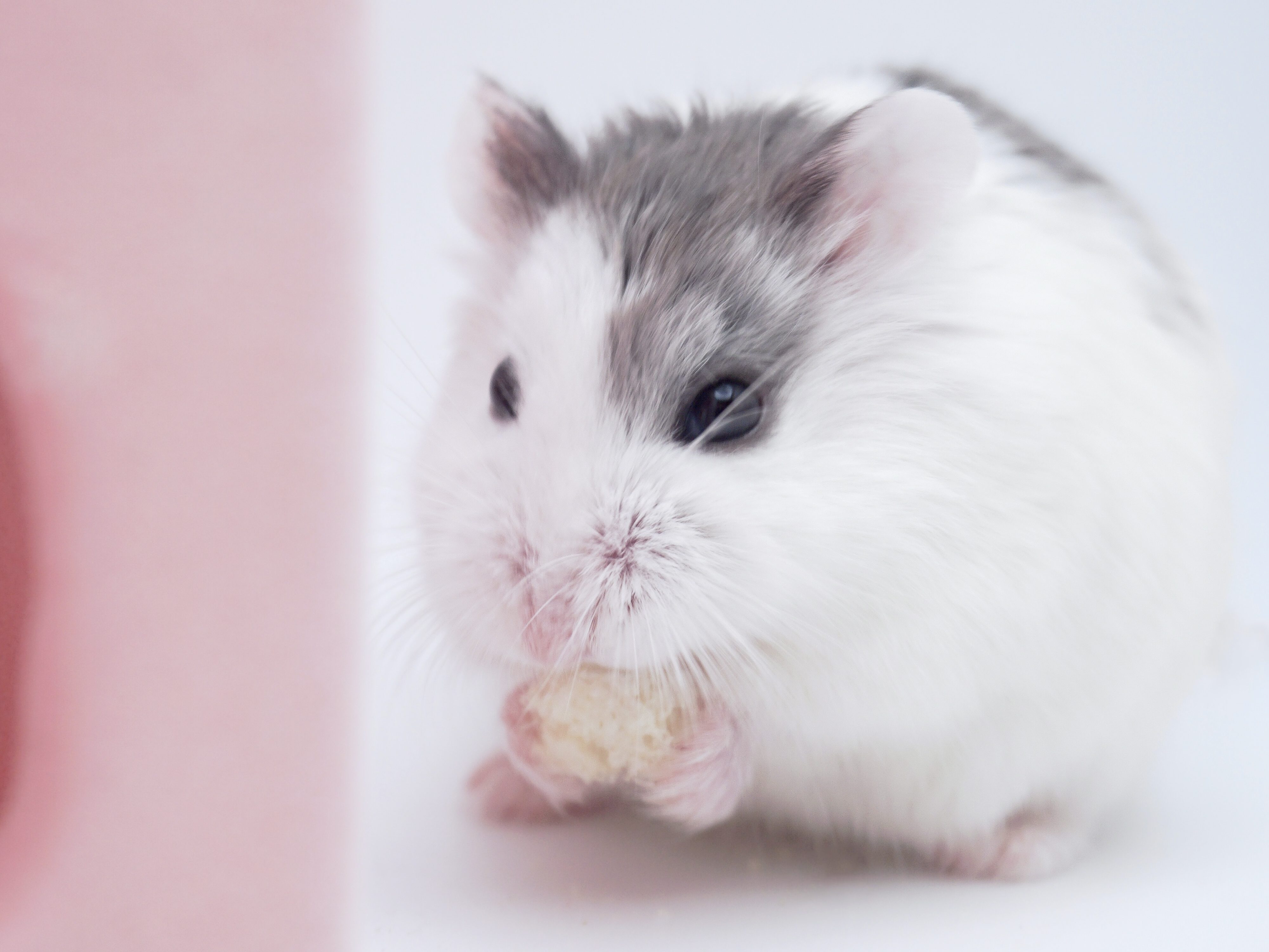
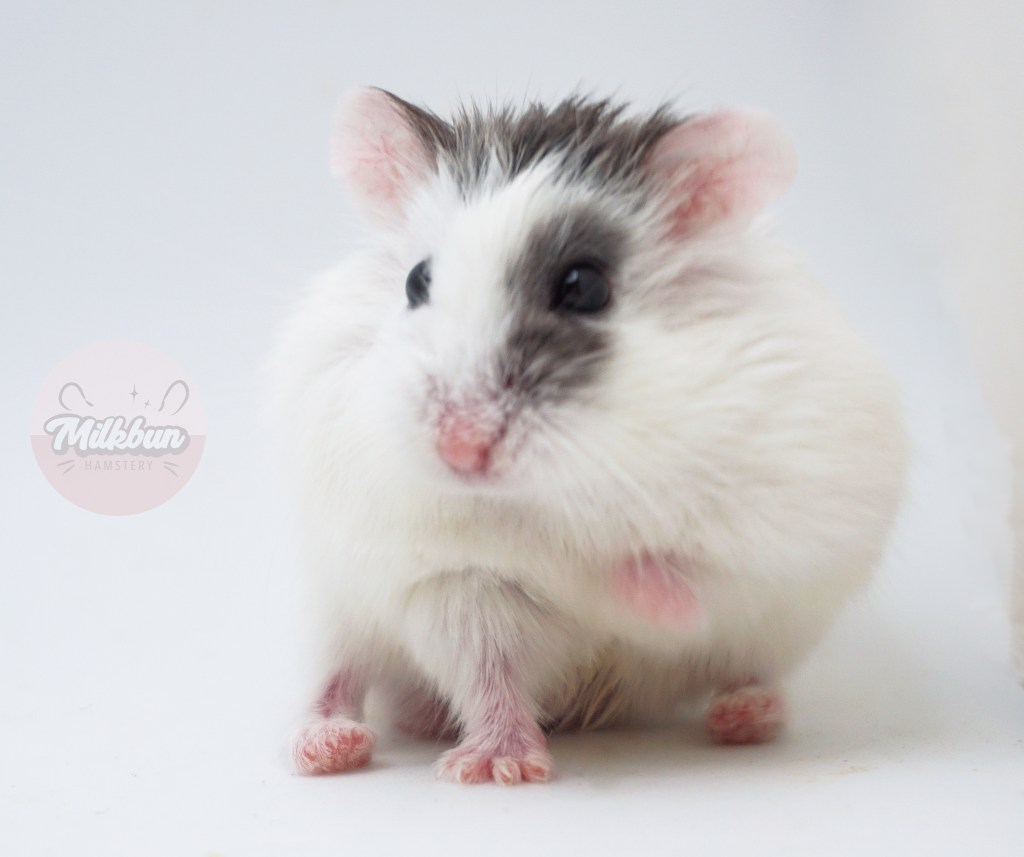
Blue Piebald:
Dark grey-blue, but can appear slightly brown in different lighting. The deeper the color is, the better. The minimal white underside is unique to the blue. The white starts at the tip of the nose, but goes under the chin, rather than over the whiskers. The hamster is white with significant patches of agouti, typically beginning from between the ears and trailing down the spine and over the sides.

Cinnamon Blue Piebald:
It is the same as the blue in markings, but noticeably paler gray coloration. Slight brown tint is more prominent in this variety, compared to the non-Cinnamon blue. Eyes are red. The hamster is white with significant patches of agouti, typically beginning from between the ears and trailing down the spine and over the sides.

Headspot:
Completely white, with a very small spot of color between the ears, which should be slightly larger than the eye. Headspot is divided into two divisions: Black Eyed Headspot, Red Eyed Headspot. Red Eyed Headspot is found in Cinnamon, Cinnamon Husky and Cinnamon Blue.
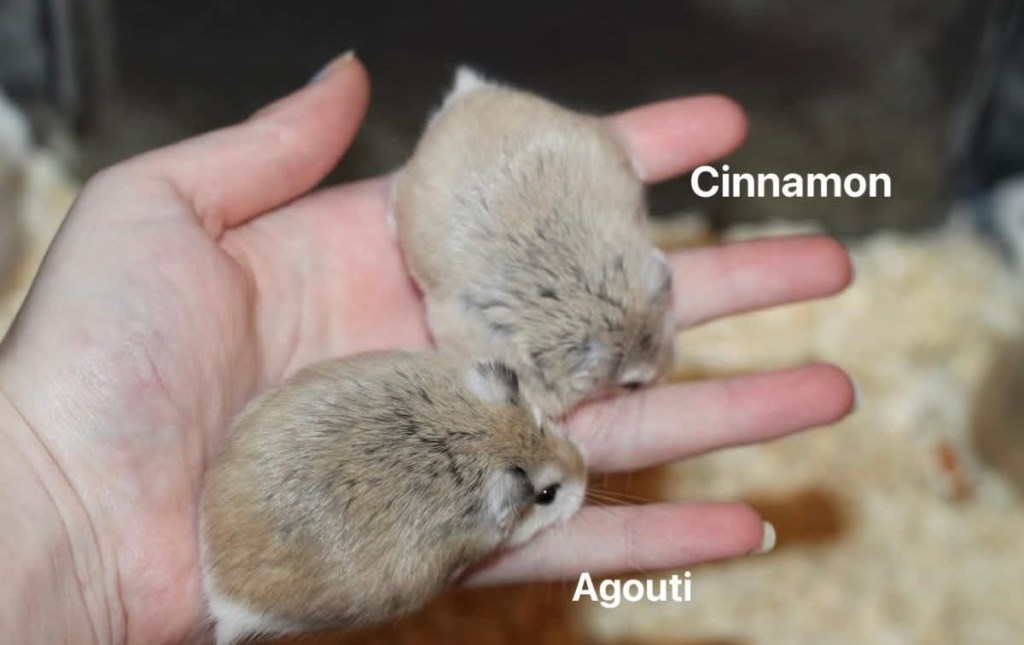
Additionally, I would like to include some examples of visual differences between the colors.
(Photos courtesy of Saskia Hamstery)


 Milkbun Hamstery | Roborovski Dwarf Hamsters