There is quite a bit of information on general care of hamsters, and there is no shortage on advice on social media platforms such as Facebook and Reddit.
However, I would advise using discretion when choosing what information to take heed of with your animals. Most prevalently in the Robo, I will caution, as their sensitivity relies heavily on environmental factors.
This perspective comes from a breeder who was, for many years, a pet owner first. I once relied heavily on online advice, motivated by the desire to provide my animals with the best quality of life possible. However, a significant issue is that much of the guidance circulated on the internet – often repeated by well-intentioned owners – tends to take certain ideals to unnecessary extremes. These recommendations are not typically grounded in evidence or species-specific research, but rather in assumptions about what humans believe the animals might appreciate.
Therefore, dear reader, I would like to state in advance that my recommendations are drawn entirely from over twelve years of working closely with Roborovski hamsters, and are based on the consistent feedback they have shown through their comfort levels and body language over extended periods of time. If you have found that your own hamster appears relaxed and content under different conditions, that is perfectly valid. Animal care is nuanced; very little is absolute, and there is no single approach that suits every individual. We do not all need to do things in exactly the same way.
Bigger is not always better.
The concept of cage size is undoubtedly the most highly debated and fiercely argued point in the hamster husbandry community. I avoid describing specific numbers and dimensions in most cases, as it really does depend very heavily on the individual hamster and situation. I myself liked to use custom enclosures of over 1,000 sq. inches in floorspace for my Syrians, but I would never dream of subjecting my Robos to that, for several reasons.
This is based on my experiments with different enclosure sizes with my Robos, with varying numbers of population.
As a general base, it is important to consider that temperament is most significantly influenced by genetics. A Robo that is extremely skittish and fearful because its recent ancestors have all been a similar way, and those are the genes that have been passed down, will likely not improve dramatically just because it had been moved from a massive, bare enclosure to a smaller one with more clutter. However, the opposite is usually true for Robos with a normally calm temperament.
When I have experimented in the past with trying to move my docile, friendly Robos to a much larger enclosure, it always becomes very apparent very quickly that it impacts their behavior and sense of safety negatively.
In my experience, they become extremely wary of my presence, and begin to avoid leaving their dens for very long. Rather than slowly exiting and clamboring over to climb onto my hand, they will dart very frantically from one hide to the next.
Not only this, bonded colonies and littermate groups will begin to feel the need to establish their own territories in the new, much larger space, and start to squabble and fight.
The curious thing is, once the groups are returned to their original cage, their dynamic with each other and humans goes right back to normal.
So, the choice is really yours. If someone is willing to risk the chance of declanning (groups becoming undone) and losing the ability to readily interact with their Robo, they are certainly welcome to. But it’s important to consider what the hamsters are telling us in proportion to their enclosure size…
Cage
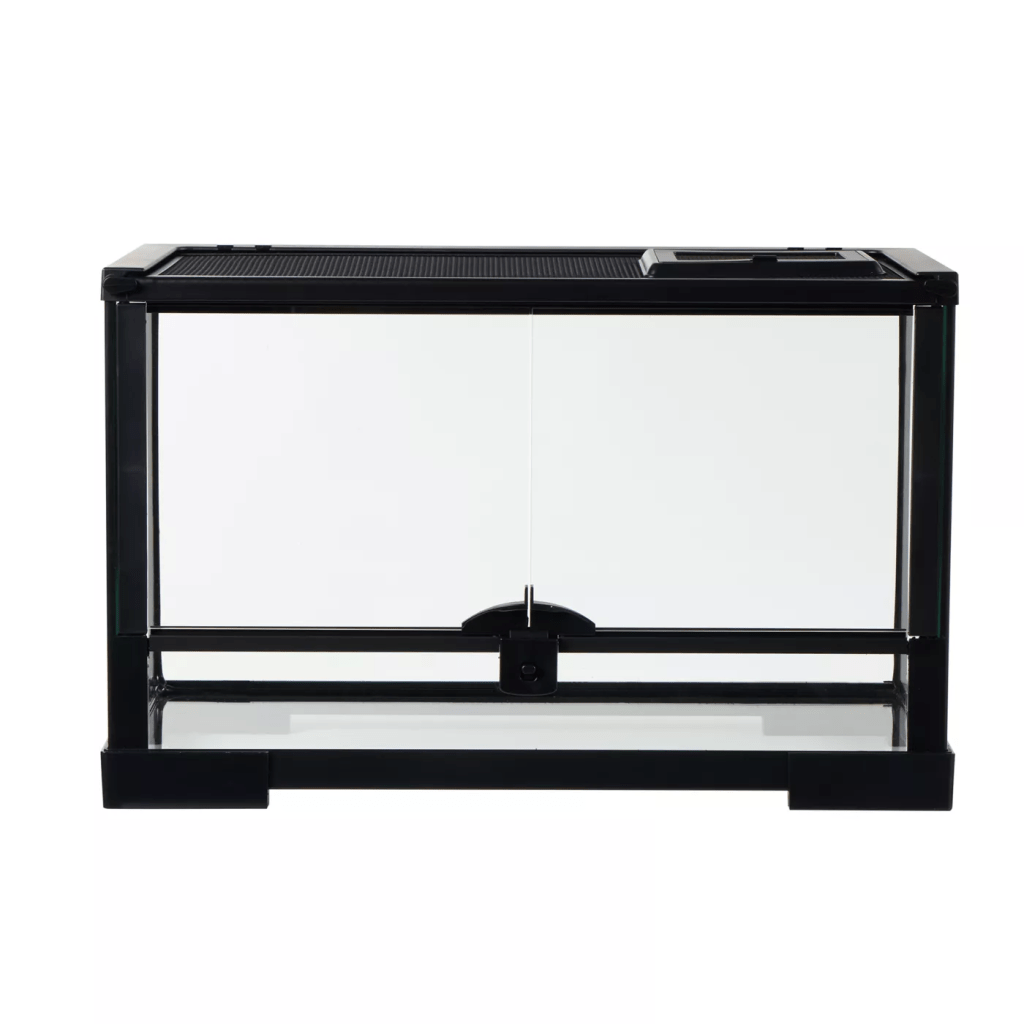
Glass aquariums/terrariums, particularly the front opening enclosures, such as this one, are a great option for a cage.
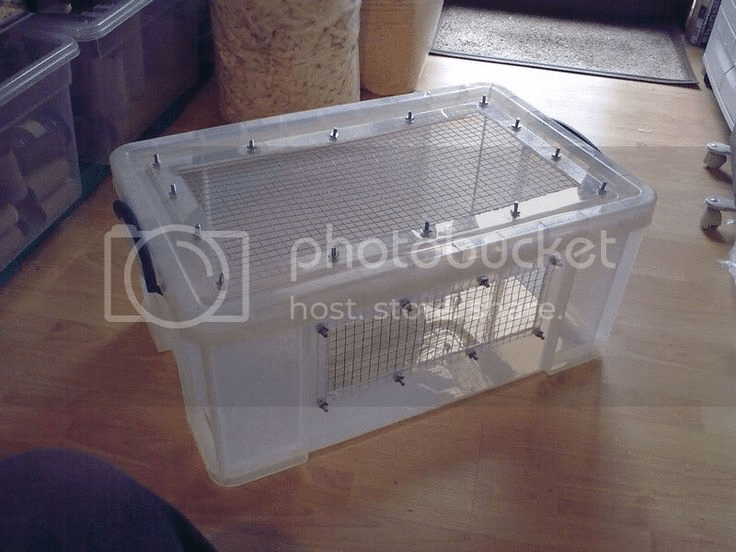
Bin cages, such as the example above, are also a great, affordable option for Roborovskis. There are a wide variety of sizes available for this method.
If you have never modified a plastic bin for rodents before, the materials needed are:
- A plastic bin with a lid
- Hardware cloth (a mesh available at most hardware stores)
- Zip ties or duct tape
- Wire cutters
- A box cutter, x-acto knife, or any other metal blade
- A lighter
- A marker
- Measure the area for your mesh with a marker. The photo example above displays a design with a hole in both the lid and the side of the cage. Side is not necessary, as leaving the bin itself whole will allow your hamsters to burrow without leaving bedding all over your floor.
- Use the wire cutters to cut out a square in proportion to the lid hole in the hardware cloth.
- Heat the blade and cut out the square marked on the lid.
- Zip tie or duct tape the mesh onto the lid.
- Done!
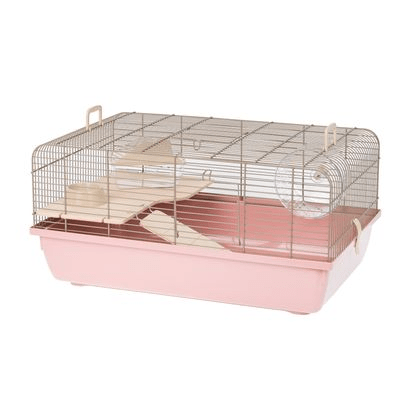
The traditional wire bar hamster cage is also an option, but you must account for the bar spacing available in these cages, as Robos can squeeze through tight spaces.
Bedding

The acceptable beddings for Robos are paper, kiln dried pine, and aspen. Personally, I prefer not to use aspen, as it’s significantly dustier than pine. Paper is also very dusty.
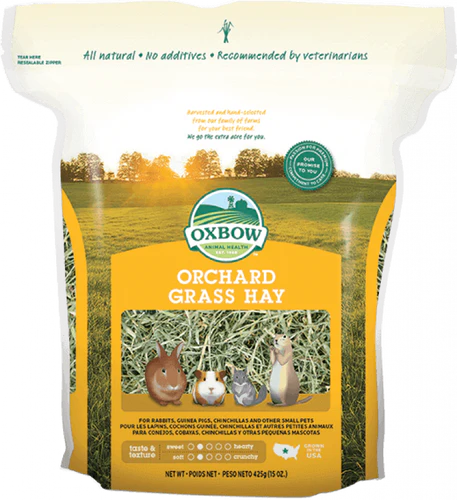
In addition to the base bedding, I like to mix orchard grass hay in and to pile above, as it allows for much more structure for burrow, and the Robos enjoy chewing on the strands. From my observation, they don’t tend to find it worth eating, but it adds more diversity to the enclosure. OGH is much softer and greener than timothy hay.
Sand

As desert critters, Robos sure do love their sand! You will often find them rolling around, grooming themselves in the bath, and sometimes it is used as a litter box. There are quite a few brands of rodent sand, but you can also purchase kid’s play sand at hardware stores, sift and bake it, and make available for your hamsters.
Diet
Diet is again one of the factors that depends very heavily on the species and individual. Roborovskis are omnivorous, but on primarily grains and seeds.
There are a variety of commercial seed mixes and pellets. When choosing and modifying your hamsters’ diet, it is important to observe the physical condition of the animals to see what is working and what is not.
These are just a few options I recommend mixing. An important note to make is that pellet diets are specifically formulated by nutritionists to provide a nutritionally complete diet for omnivorous rodents, of which seed mixes can be a great supplement to, and provide further enrichment and interest for the hamsters.
- Mazuri Rat & Mouse
- Higgins Sunburst Gourmet Hamster & Gerbil Food
Roborovskis love mealworms, particularly live. They go nuts for hunting the little bugs, even from a very young age.

Keeping Robos as a single, pair, or colony?
If you are looking for a single Robo as a pet, I would recommend a male. The main reason being that while female Roborovskis are very easy to maintain in a group setting and simple to introduce to new adult cagemates, males are a bit more complicated. Here’s a full length article that goes much more in detail for the topic of cohousing Robos.
Single Robos can live perfectly happy lives, but the difference between viewing and interacting with a solo Robo and a vibrant colony is quite stark in person. However, while there are definitely certain situations where a male Robo can peacefully live with other males (for example, a father that is fine living with his adult sons, or littermates in a colony), sometimes it is not a possibility. I strongly recommend providing single Robos with a wheel and much enrichment from toys and your affection.
Robos do quite well in pairs as well. It is simplest to have a pair of females (it is preferable that the pairing is mother/daughter, sisters, or introduced young, but not necessarily a requirement if you know how to do introduce Robos), as they do not compete sexually, unlike males. Male pairs are also possible, but having a more conservative cage size is much more imperative in their case.
From my experience, Robos seem the happiest and most lively in colonies/small groups. It seems as prey animals, it is not very different from the mentality of schools of small fish. “Everyone around me is safe and content, so it must be safe here”. The group will choose to sleep all together in one hide, even if there are plenty of options available to nest in. They spend much of their day grooming one another, will share food, and love to swarm the food bowl when a new scoop comes.
From my experience, groups of 4-9 tend to be the healthiest socially.

Do groups need one hide per hamster, or additional space per hamster?
The short answer – is no.
We as people may assume that the Robos need more room, more individual accessories per hamster, but this is not true. No, not out of stinginess, but for the benefit of the hamsters.
When there is too much additional space in proportion to the group size, it causes the hamsters to panic and think that they need to “claim” different areas and defend those spaces. This is much less sensitive of an issue the bigger the colony is, but it’s the most probable to occur in a too large space with only 2-3 Robos.
More specific questions?
If there are any specific points of inquiry in regards to Robo care, please feel free to email me with any questions you may have at milkbunhamstery@gmail.com.

 Milkbun Hamstery | Roborovski Dwarf Hamsters