Written by Hannah Y. of Milkbun Hamstery.
Roborovski dwarf hamsters (Phodopus roborovskii) are well known among hamster fanciers for being the most sensitive of the species in captivity. As the first captive breeding efforts were in the 90s, Robos have been present in the fancy for a very, very short amount of time.My first experiences with Robos were as a child, when I kept three females. They were incredibly skittish, nearly impossible to handle, and not particularly fond of interaction—but I loved everything about them. This early experience sparked my longstanding interest in animal husbandry, genetics, and selective breeding.
Introduction

In my teenage years, I gained further insight into breeding theory and observation through dog shows and by assisting breeders. With this foundation, I became determined to breed the “ideal” Roborovski: one that combined excellent temperament, health, and conformation. Over the years, I’ve carefully selected for these traits, focusing on improving the breed’s overall stability and making them more approachable as pets.
Through this ongoing work, my objective is clear: to raise Roborovskis that are not only healthier but also more confident, well-socialized, and better suited for life in a home. By combining careful genetic selection with a deep understanding of their needs, I aim to contribute to the long-term improvement of the breed.
Selective Breeding
While I had a passion for interpreting ‘type’ (ideal structure and appearance), temperament was a more pressing matter in this species. As the popularity of the hamster hobby increased, the Roborovski quickly gained a reputation for being an “observation pet”. With the Robos I grew up raising, I was in agreement with this for quite a while (though I disagree, now). However, I felt that it was an important consideration to recognize that every animal pre-captive breeding will have had a tendency to fear humans as a survival mechanism.
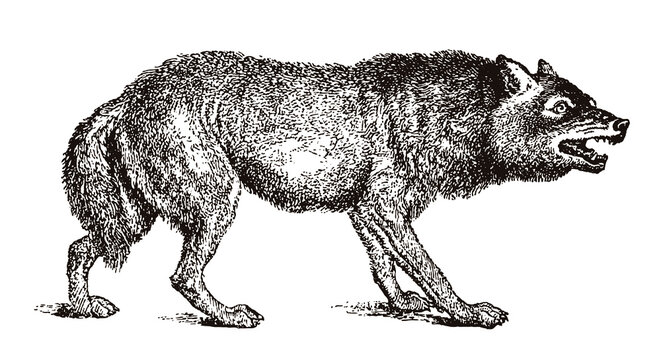
Take dogs for example. Genetic studies indicate that dogs (Canis familiaris) and modern wolves, including the gray wolf (Canis lupus) are both descendants of an extinct species of wolf. The difference is extremely apparent.
It is even more significant when we remember that we are dealing with a very small prey species [hamsters] evolved to avoid predation when possible.
Dogs appear in a dizzying array of coats (colors, length, type), sizes, eyes (color, shape, size), ears (length, shape, size, set), tails (length and shape), skull shapes (muzzle length, head width, etc), and even things such as intentionally larger dentition. Even beyond appearance, temperament varies wildly among breed, even within breeds.
How can it be that the Cane Corso is an excellent guard dog, but the Golden Retriever is famously trusting of anything that breathes? Selective breeding. The Golden Retriever is apt for the purpose that its founders intentionally bred for, retrieving, by having an instinct to return to its handler with its prey, and to hold it gently. What would happen if you were to bring a Cane Corso out to the field and hunted a duck in front of him? Most likely, he would run out to grab, and promptly gnaw on its head, no matter how hard you called him. Certainly, the experienced field dogs need training to be very successful, but we can agree that training the Cane Corso to do the same job as a retrieving breed would be exponentially difficult or impossible.

Now consider the modern gray wolf. Putting aside the fact that there are four subspecies varying on the biome, the species gray wolf is mostly homogenous. Wolves are known to fear and avoid humans as a survival mechanism, and not very safe for the average Joe to own. Would you be able to pluck a wolf from the wild and expect it to be as trusting as your new Poodle? I would hope the answer is a unanimous absolutely not.
Shall We Bring It Back to Hamsters?
How exactly can we apply this to hamster breeding?
There are five (5) species of hamster that are currently bred and owned in captivity. M. auratus (Syrian), C. griseus (Chinese dwarf hamster) – and then the 3 that share the genus “Phodopus”: P. sungorus (Djungarian, or more commonly, Winter White), P. campbelli (Campbell’s dwarf hamster), and P. roborovskii (Roborovski dwarf hamster). Out these species, the only two species that are even remotely related enough to be able to hybridize are P. sungorus and P. campbelli.
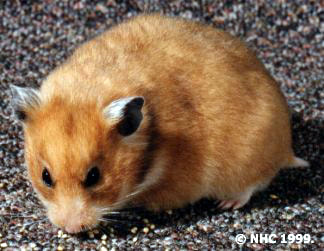
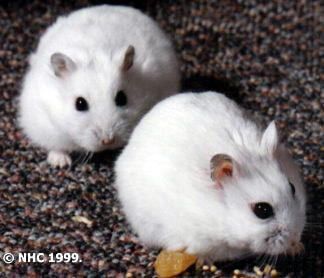
The Syrian hamster is significantly larger than the rest, ranging from 114-140 grams (can often be even larger due to selective breeding), while the others range from 15-60 grams. Campbells and Winter Whites are noticeably larger than Roborovski – which are the smallest.
The Syrian has been bred in captivity for the longest, and this shows in their typically more placid disposition and shockingly enormous range of coat colors and coat types (such as long fur). The first wild colony was brought to the UK in 1880 by British diplomat James Henry Skeene, and all pet Syrians are descended from one litter of wild caught hamsters in 1930.
Campbell dwarfs were introduced to the UK in 1963, and began to appear in pet stores during the 1970s. They quickly gained popularity, and come in the second widest range of colors. They are the only other species with a varying coat type discovered (at this time…), which is the “rex” gene. These Campbells have long, curly fur.
Winter whites descend from a wild colony captured in 1968, and were introduced to the UK pet trade in the late 1970s. They were first noted to be in existence in 1773, much longer than their close relative, the Campbell – and they were believed to be the same species until the 20th century.
In 1900, it was reported that Chinese hamsters were captured and sold as pets in Beijing. For much of their history with humans, Chinese hamsters contributed to science. Chinese hamsters as pets in the US and UK began to appear around the same time as the Campbells and WWs.
Photos belong to the National Hamster Council.


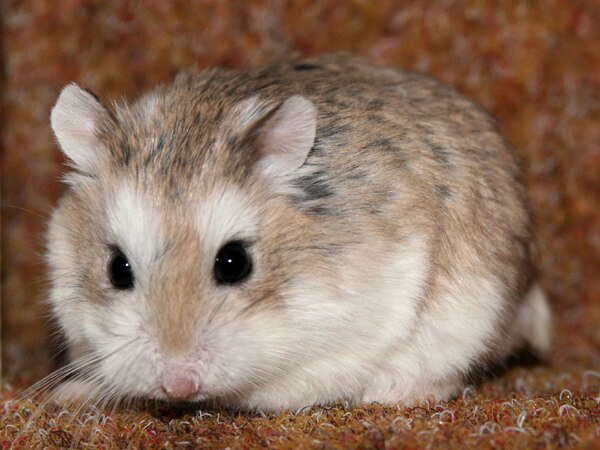


What About Robos?
Robos arrived to the pet trade in the 1990’s, occurring in both the US and the UK around the same time. There was a wild-caught colony brought to the London Zoo in 1960, but breeding efforts were a failure.
Improving Temperaments in Robos: Nature or Nurture?
When I began with my foundation animals, I expected progress to be rather slow. They were “okay”, meaning they associated my presence with food, would take food from my hand, but wouldn’t approach me voluntarily and darted away if I attempted to pick them up.
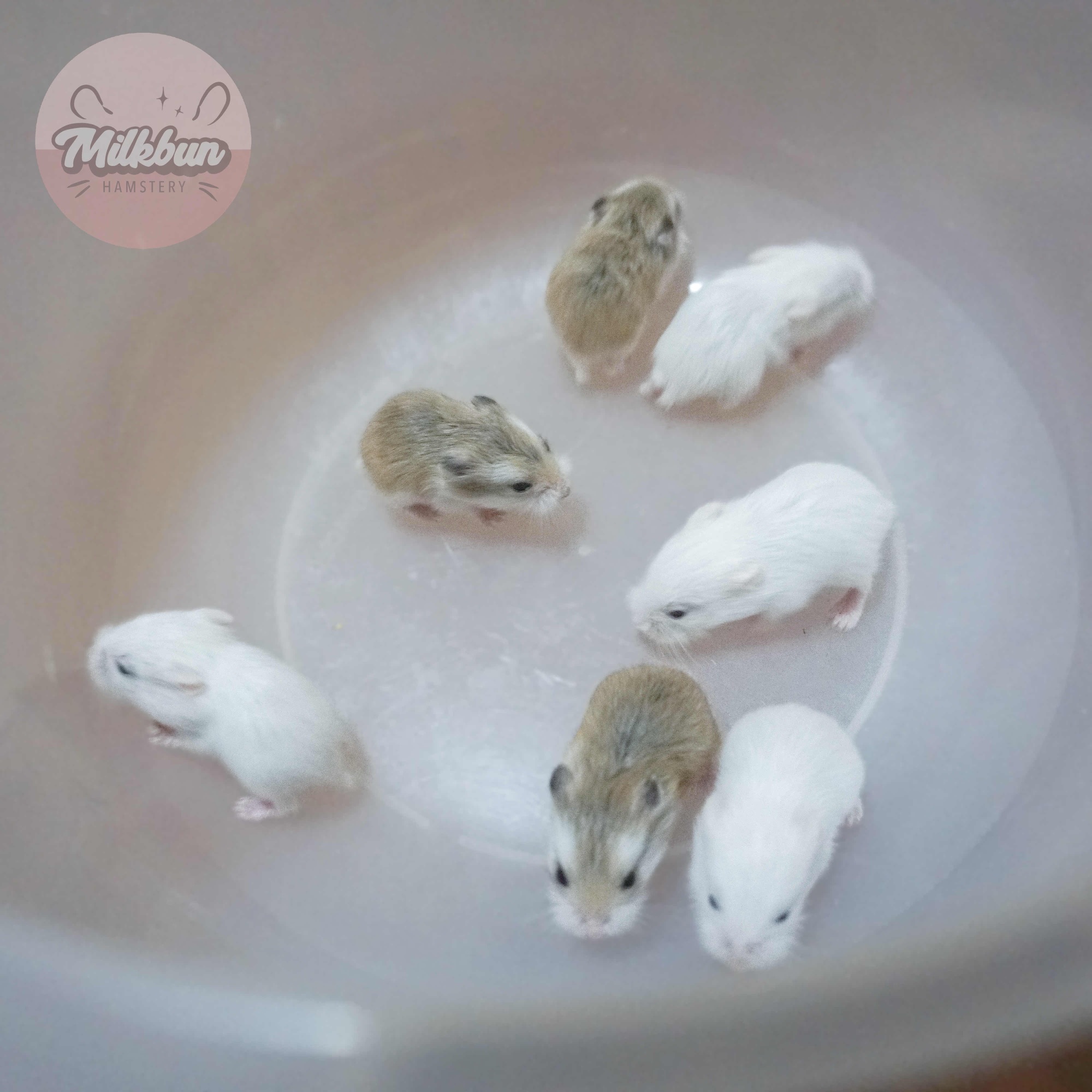
However, I was very surprised that even in one generation, the improvement was quite exponential. One of my early females was a self husky (self is a term for ‘solid’, ‘husky’ is a color), I called her ‘Peach’. Peach was more nervous than the others – she would avoid touch at all costs, jump out of your hand, and hide at the sound of my voice. I was hesitant to include her in my program, as it could cause a setback, but her type (particularly the shape of her muzzle, eye set, ear shape and set) and natural condition were very nice. I paired her to the male with the best temperament I owned, a large blue pied male. He would climb on my hand voluntarily, but was very distrustful when I initiated touch.
Above is a photo of the resulting litter, 3 self agouti females, 3 self white females, and 1 self white male. 7 pups is quite a large litter for this species of hamster (average litter size I have bred is 3-5 pups).
A commonly debated topic in animals (and humans) is “nurture vs. nature”. “Nature” meaning the genetics of fauna, which would be inherited characteristics – “Nurture” meaning the environment and upbringing. In this document for the AKC Canine Health Foundation, Dr. Jacqui Neilson discusses research done with rats and dogs to explore the genetic influence on behavior.
The consensus is that both genetics and environment contribute to animal temperament. From the difference between rodent and dog breeding I planned a rating system of 0-5. 0 being untouchable, 5 basically being a puppy. I put Peach at 1, her mate at a 3. The trio of agouti females I marked similarly at about a 2. I could pick them up, to an extent, but they clearly preferred to avoid me, and would ultimately jump out. Out of the three white females, there was a 1, a 2, and a 3. The female who put as a 1, was exactly the same as their mother, easily panicked. The female who was a 2 was just like the agouti females – not as nervous as their mother, but didn’t enjoy or seek me out. The female who was a 3, would crawl into my hand and climb up my arm when given the opportunity, but spooked slightly when picked up directly. The white male I considered a 3. He was the calmest out of them all, crawled into my hand, yet similarly jolted when disturbed.
As a breeding theory nerd, I was utterly fascinated by the results of every litter I bred. I noted the results of an outcross, linebreeding, and repeated pairings. I may break down my specific findings with each type of pairing in a different page, but I will wrap it up for now. Here is a video of a recent litter from late 2024. All of the hamsters in the video are the offspring of an agouti pied male, Milkbun Jolly Gingersnap, and a white female, Milkbun Charmmy Kitty – except for the agouti pied female (the white one with the darkest patches), she is their aunt.
The hamsters are in a spare container that I use for a variety of purposes. To inspect condition and temperament, take videos, place in temporarily while cages are being cleaned, feed live mealworms (I prefer not to feed insects in the enclosures, as the bugs are impossible to find in the bedding if they escape), and as a neutral area for breeding pair/colony introductions. (Note: Here is a link to an article I had written detailing Roborovski social behavior and cohousing)
On average, if I would place a pet store or rescue Roborovski in the container, the behavior I expect is very rapid pacing, jumping at a corner desperately, and when a hand approaches, pressing itself against the wall – ready to dart away. The topic of taming is also for another day, but the point is, the personalities of my Robos at my current generation are ones that I have found to be very sweet and awesome pets. I can pick any of them up one-handed without any issue, hold them gently on their backs, and they will just relax in my hand.
One might argue that my hamsters are friendlier because they were raised in my home and handled from 14 days of age. However, considering the range of temperaments I’ve experienced with the same environment, same level of handling with each and every pup, I would disagree with it to a certain extent. Of course, not being traumatized from a young age is very important, but genetics appear to take the largest capacity in determining their mannerisms. All of my litters receive a proportionate amount of handling, yet as they mature, it is abundantly clear how they will be.
Physical Characteristics: Breeding for “Type”
What is the difference between “type” and the “standard”?
Type – the defining characteristics of a breed or species.
Standard – the official written blueprint to define type in order to evaluate the conformity of an animal to the desired specimen.


The Standard
There is no perfect animal. However, it is our interest as breeders to get as close to our collective idea of perfection in a breed (and our case, species) with a written standard.
Based on the ideal type and conformation of Robos and the standards in the hamster organizations in other countries, I have attached below the current proposed standard for the Roborovski dwarf hamster in the US Dwarf Hamster Club of America.

The Head
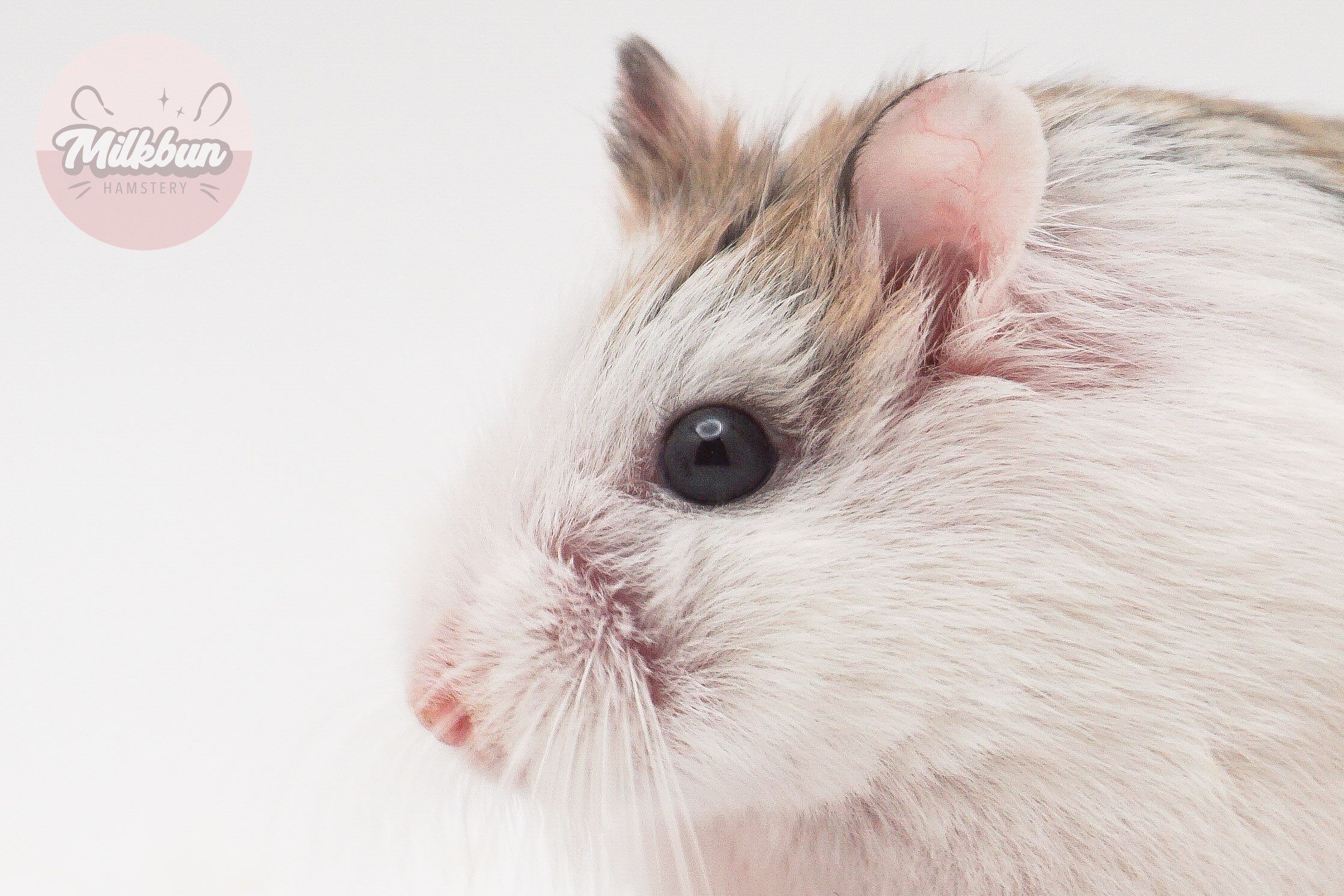
Aside from its characteristic wild coloration, the head of the Roborovski is its most distinctive trait. The head is quite large in proportion to the body, broad,
with a short, blunt muzzle. The ears and ears are widely spaced.
When viewed from above, the head forms an equilateral triangle. Meaning, of the
triangle, the line between the ears is equal to the lines between the nose and ear.
The eyes are positioned either on the middle of those lines or closer to the nose. Profusely whiskered.
Faults: Narrow head, long muzzle, snipey muzzle, closely set eyes.



 Milkbun Hamstery | Roborovski Dwarf Hamsters